Lamb Chops and Pan Fried Tomatoes

Chops – lamb or pork – make an effortless supper, and with a simple marinade they can be as flavoursome as a meal that you might slave over. They also give the man of the house some quality time with the grill!

If you’re pushed for time or the meal is extremely impromptu, marinades can be skipped over and replaced with a ‘dry-rub’. To dry-rub chops, just rub any salt, pepper, herbs or spices that you like into the meat, it won’t tenderise the meat nor will it give it the extra succulence that a marinade would provide, but it’s a quick and easy way to add a great deal of flavour.
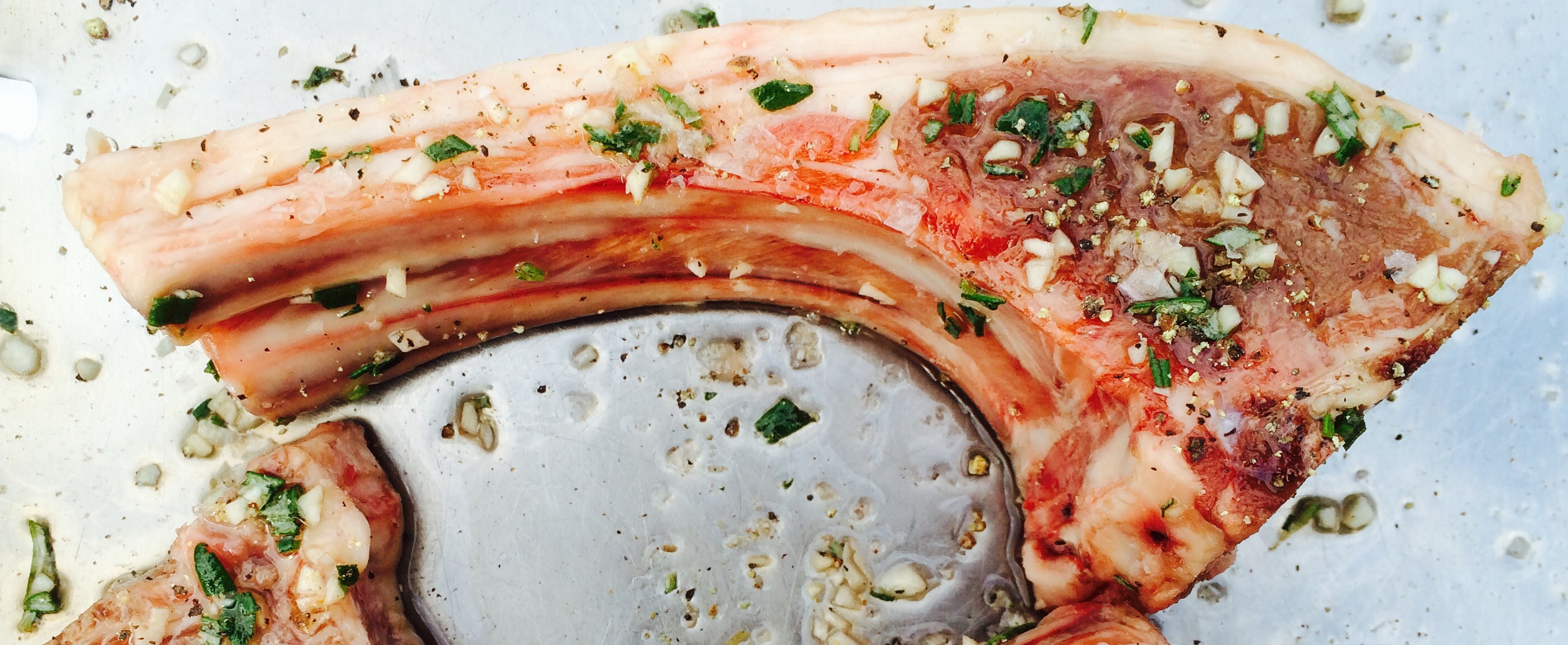
That's one tasty looking chop!

That’s one tasty looking chop!

Chops are best cooked on the BBQ but it’s raining so I’ll be doing mine under the electric grill (on a very good BBQ, thin chops can be cooked in just 5 minutes: flash each side with the lid down for a couple of minutes). For thin lamb chops under an electric grill, the highest temperature setting will give the best result. In the case of pork chops, which tend to be thicker, favour a more moderate setting to prevent them drying out during the longer cook time.

It’s of utmost importance chops are allowed to rest for up to 10 minutes, allowing the juices to flow through the chop. If you don’t allow them to rest, you’ve wasted the time you spent cooking them.

Let’s stop chopsing and get down to it.

Ingredients: (serves 1)

3 lamb chops
3 Tbsp olive oil
10 peppercorns, crushed
2 garlic cloves, crushed
3 Tbsp red wine vinegar
1 lemon
2 Tbsp mint, chopped
8 small tomatoes, still on the vine
1 Tbsp balsamic vinegar
1 Tbsp extra virgin olive oil

Preparation & Directions:

For the marinade: combine mint, garlic, vinegar, olive oil and the juice of the lemon in a bowl. Put the chops, marinade, and squeezed lemon halves into a sealable bag, seal it and give it a quick shake. Put this in the fridge for a minimum of two hours before cooking, overnight is best though.

Once the chops have marinated, remove them from the fridge and leave to come to room temperature, 20 minutes. In the meantime preheat your grill to a high heat setting. Put the lamb chops straight onto a rack about 6 inches away from the heating element, a tray beneath to catch the juices. Make sure to leave the oven door ajar to stop the cooker overheating and spoiling the chops. Grill each side for 5-10 minutes, depending on the size of the chops, until they brown slightly. Set aside to rest for up to 10 minutes so that they retain their juices.

Heat some olive oil in a frying pan over medium heat. Pierce the tomatoes so that they don’t rupture and add them to the pan, still on the vine so that they can be easily removed together. Drizzle some extra virgin olive oil and balsamic vinegar on top. Let them sizzle for 5-10 mins then remove from heat.

Dish up.

(Forgot to photograph the finished article, too excited to stuff my face, sorry!)

Trevor Trout’s Gills of Gluttony

Me and my mate Trev

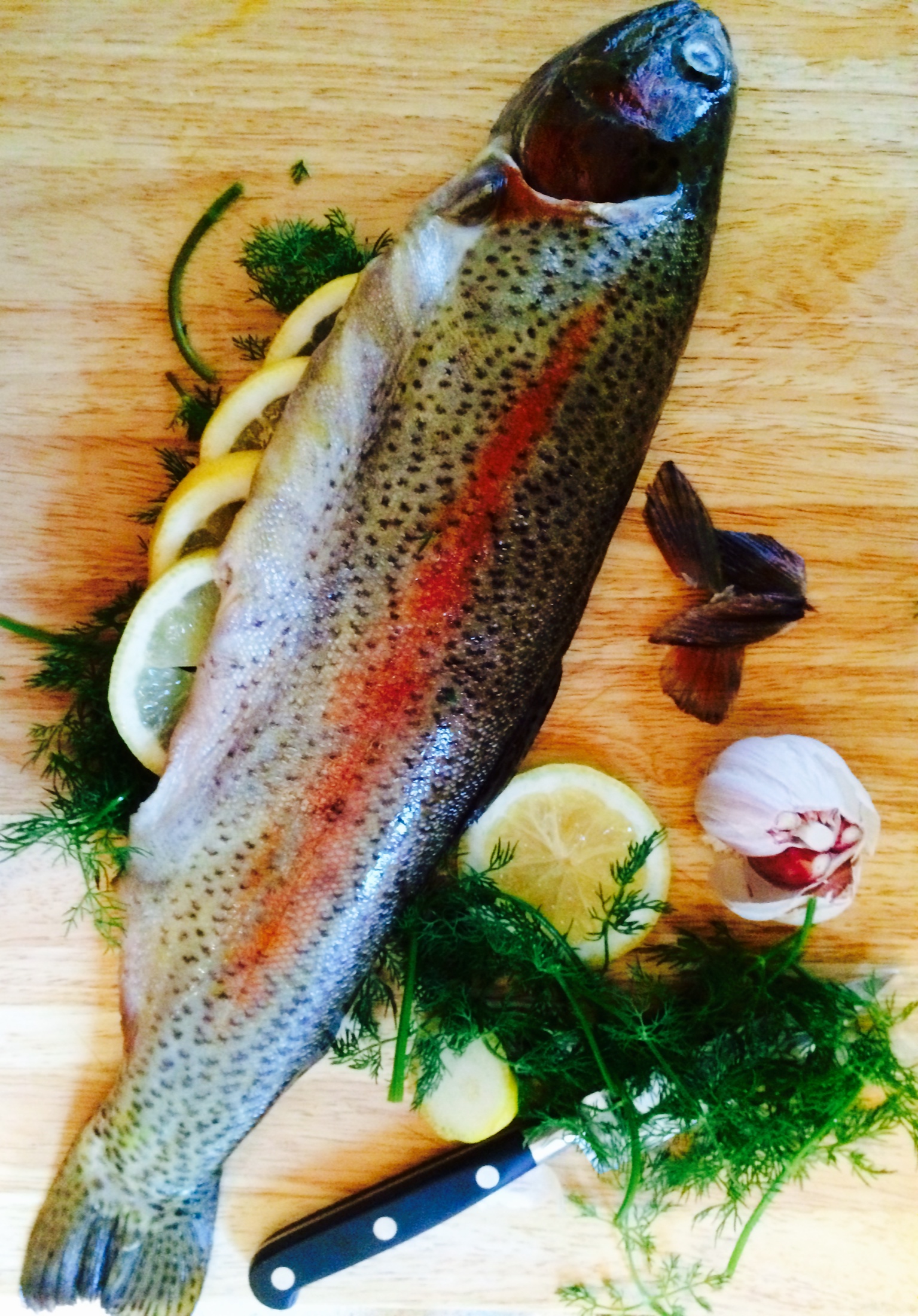
This is a treat and a half, and taking less than an hour to go from fridge to table it’s the perfect lazy man’s dinner. If you’ve been following my posts precisely as closely as you ought to have been, you will remember from The Ovine Oculus that I was particularly taken with Pierre Koffmann’s salted sea bass recipe from The Times Magazine. Yesterday, my grandparents gave me a fresh rainbow trout, Trevor or Trev for short, which they had been given by a family friend. Tipping the scales at 2 lb, Trev was something of a small, country stream leviathan.  Feeling ever greedy, not content with the salty serving (Hank’s hock) we had the day before last and wanting to make use of Trev at his freshest, I decided to get salty and prepare him tonight. If you want to be extra fresh, you could fish your own trout and have all the fun of gutting, or you could just let your fishmonger fishmong.

Obviously, you don’t eat the salt so why spend several pounds on salt that you won’t be eating? The salt casing acts as a small oven that serves to trap in the delicious juices. Ideally, the scales are left on so that they compound the moisture trapping effect, it’s not the end of the world if they’ve been removed though, just make sure your salt casing is extra dense. The skin of a fish is my favourite bit, so I’ve gone against the ‘pro-tip’ by proceeding scaleless. I wouldn’t recommend eating scales, you’re not Action Man.

Stuffed to the gills.

Ingredients:

1 fat trout, gutted
lots of dill
2 garlic cloves, peeled and sliced
1 lemon, sliced
1kg sea salt
Tbsp. fennel seeds
1 egg white
2 bay leaves
1 dozen whole peppercorns
1 beurre blanc sauce

Preparation & Cooking:

Preheat oven to 200°C and give your fish a rinse, inside and out, with some cold water. Stuff the cavity of the fish with the garlic, peppercorns, dill sprigs and lemon slices. Don’t forget to snip off any fins that haven’t already been removed.

Grind up fennel seeds in a pestle and mortar and, in a large bowl, mix together with the egg white and salt until it looks like cloudy glass. Spread some of the salt mixture on a baking tray, put bay leaves on the salt bed and place the prepared fish on top of that. Pack the rest of your salt mixture over the body, leaving the head and tail poking out for presentation. The casing should be evenly spread and approximately a centimetre thick.

Slide your tray into the oven for 20-30 minutes, depending on the size of your fish. I usually gauge 10 minutes per inch thickness of the fish, though this is just a rough rule of thumb. To fine tune cooking time, remove the fish after 20 minutes, slip a knife through the salt and into the thickest part of the fish. If the knife is hot to touch to your lips, then the fish is done.

Awwwh, yeahhh

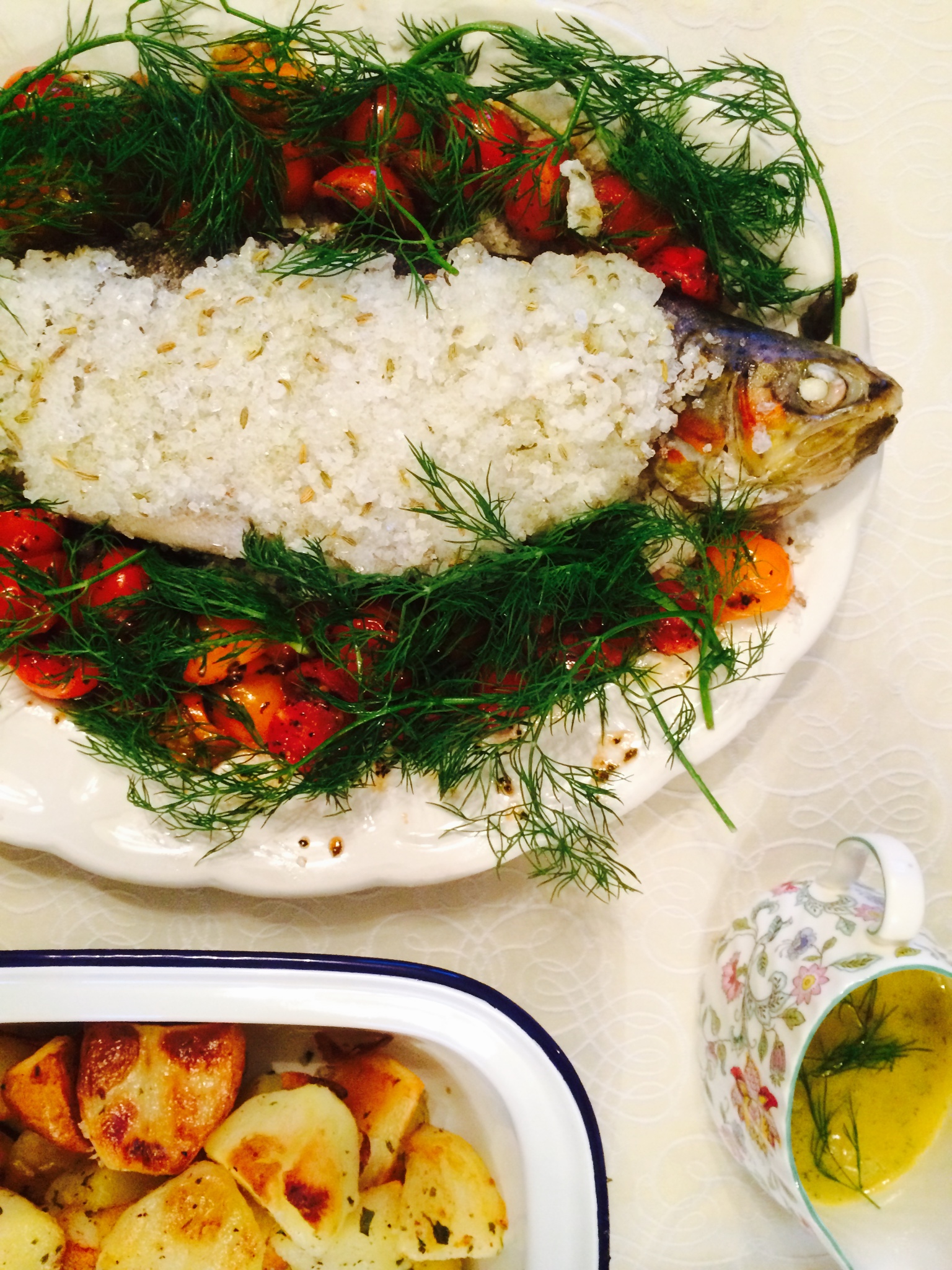
Pan fried tomatoes and some dill ensure that Trev is presented well.

Transfer your fish onto a dill covered plate to serve with sides and sauce of your choosing. I love to have fish with cherry tomatoes that have been pan fried with lots of basil, and a beurre blanc – a rich, white wine (usually a Muscadet, a produce of Loire Valley, France) butter sauce – that has been riddled with lemon and fresh dill. My sauce was made using Muscadet, Domaine de la Quilla, 2012, and obviously the rest of it was drank.

Use the back of the spoon to crack the salty casing around the fish, and lift up the lid of your treasure chest to reveal your fishy gold. The fish will now need filleting. To get the top fillet off, cut across the fish just below the gills and again just above the tail, run the knife along the spine and gently lift the top fillet off. Now grab the tail and gently pull the spine away from the bottom fillet, using a knife to help you work your away along the length of the fish, until the head peels away too, leaving the fillet on the plate. The single piece of fishy waste can be discarded or kept for fish stock. You now have two succulent, salt baked fillets that are ready to eat. Don’t be disheartened if this feels like hard work, it’s fiddly and takes practice, but lots of fun once you’re good at it!

La fin.