Lamb Chops and Pan Fried Tomatoes

Chops – lamb or pork – make an effortless supper, and with a simple marinade they can be as flavoursome as a meal that you might slave over. They also give the man of the house some quality time with the grill!

If you’re pushed for time or the meal is extremely impromptu, marinades can be skipped over and replaced with a ‘dry-rub’. To dry-rub chops, just rub any salt, pepper, herbs or spices that you like into the meat, it won’t tenderise the meat nor will it give it the extra succulence that a marinade would provide, but it’s a quick and easy way to add a great deal of flavour.

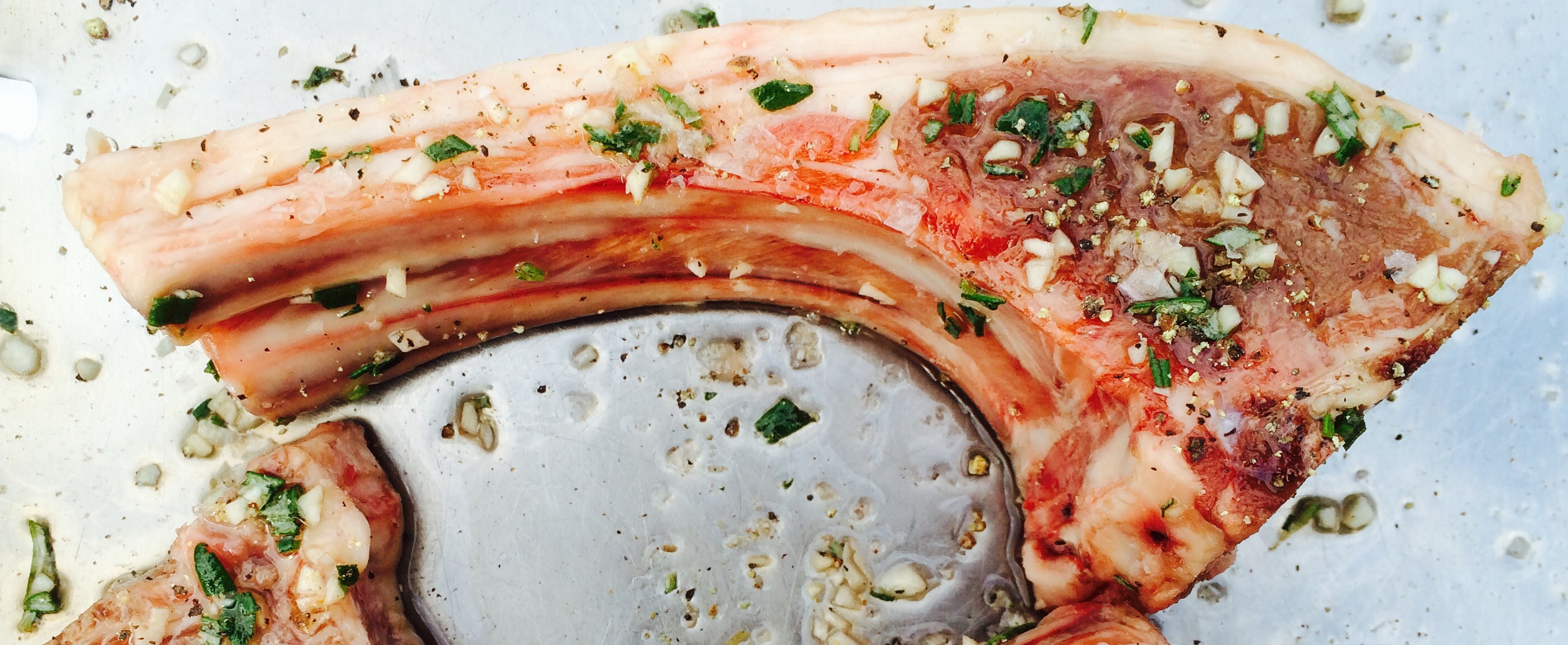
That's one tasty looking chop!

That’s one tasty looking chop!

Chops are best cooked on the BBQ but it’s raining so I’ll be doing mine under the electric grill (on a very good BBQ, thin chops can be cooked in just 5 minutes: flash each side with the lid down for a couple of minutes). For thin lamb chops under an electric grill, the highest temperature setting will give the best result. In the case of pork chops, which tend to be thicker, favour a more moderate setting to prevent them drying out during the longer cook time.

It’s of utmost importance chops are allowed to rest for up to 10 minutes, allowing the juices to flow through the chop. If you don’t allow them to rest, you’ve wasted the time you spent cooking them.

Let’s stop chopsing and get down to it.

Ingredients: (serves 1)

3 lamb chops
3 Tbsp olive oil
10 peppercorns, crushed
2 garlic cloves, crushed
3 Tbsp red wine vinegar
1 lemon
2 Tbsp mint, chopped
8 small tomatoes, still on the vine
1 Tbsp balsamic vinegar
1 Tbsp extra virgin olive oil

Preparation & Directions:

For the marinade: combine mint, garlic, vinegar, olive oil and the juice of the lemon in a bowl. Put the chops, marinade, and squeezed lemon halves into a sealable bag, seal it and give it a quick shake. Put this in the fridge for a minimum of two hours before cooking, overnight is best though.

Once the chops have marinated, remove them from the fridge and leave to come to room temperature, 20 minutes. In the meantime preheat your grill to a high heat setting. Put the lamb chops straight onto a rack about 6 inches away from the heating element, a tray beneath to catch the juices. Make sure to leave the oven door ajar to stop the cooker overheating and spoiling the chops. Grill each side for 5-10 minutes, depending on the size of the chops, until they brown slightly. Set aside to rest for up to 10 minutes so that they retain their juices.

Heat some olive oil in a frying pan over medium heat. Pierce the tomatoes so that they don’t rupture and add them to the pan, still on the vine so that they can be easily removed together. Drizzle some extra virgin olive oil and balsamic vinegar on top. Let them sizzle for 5-10 mins then remove from heat.

Dish up.

(Forgot to photograph the finished article, too excited to stuff my face, sorry!)

Larry Lamb in the Style of a Whore (alla Puttanesca)

I do enjoy a good bit o’ lamb. I also enjoy anchovies, to the point where I could eat an entire jar, straight from said jar. Bringing my two loves together, I’ve created Lamb Shank alla Puttanesca – the ultimate surf and turf.

The lamb shank – the lower part of Larry Lamb’s leg – is in general a super cheap cut of meat, the exception being central London of course. Our capital is seeing a major increase in shank popularity, it’s becoming a window piece for trendy butchers as well as an up-and-coming dish for higher tier restaurants. All of this ensures that we have to fork out a little more of our hard earned penny if we want zone 1 lamb. This resurgence of the shank is hardly surprising; it looks fantastic when stood proudly atop a creamy mash base, and, when braised for an indulgent period of time, is tenderer than you can possibly believe. Compound these attributes with the fact that you can stick several in a casserole and leave them to do their own thing whilst you continue to prepare other courses, have an apéritif (or three) or even take a bath, and you’re onto a real winner. So yes, the lamb shank is back and it looks like it’s here to stay. Hurray!

rngne

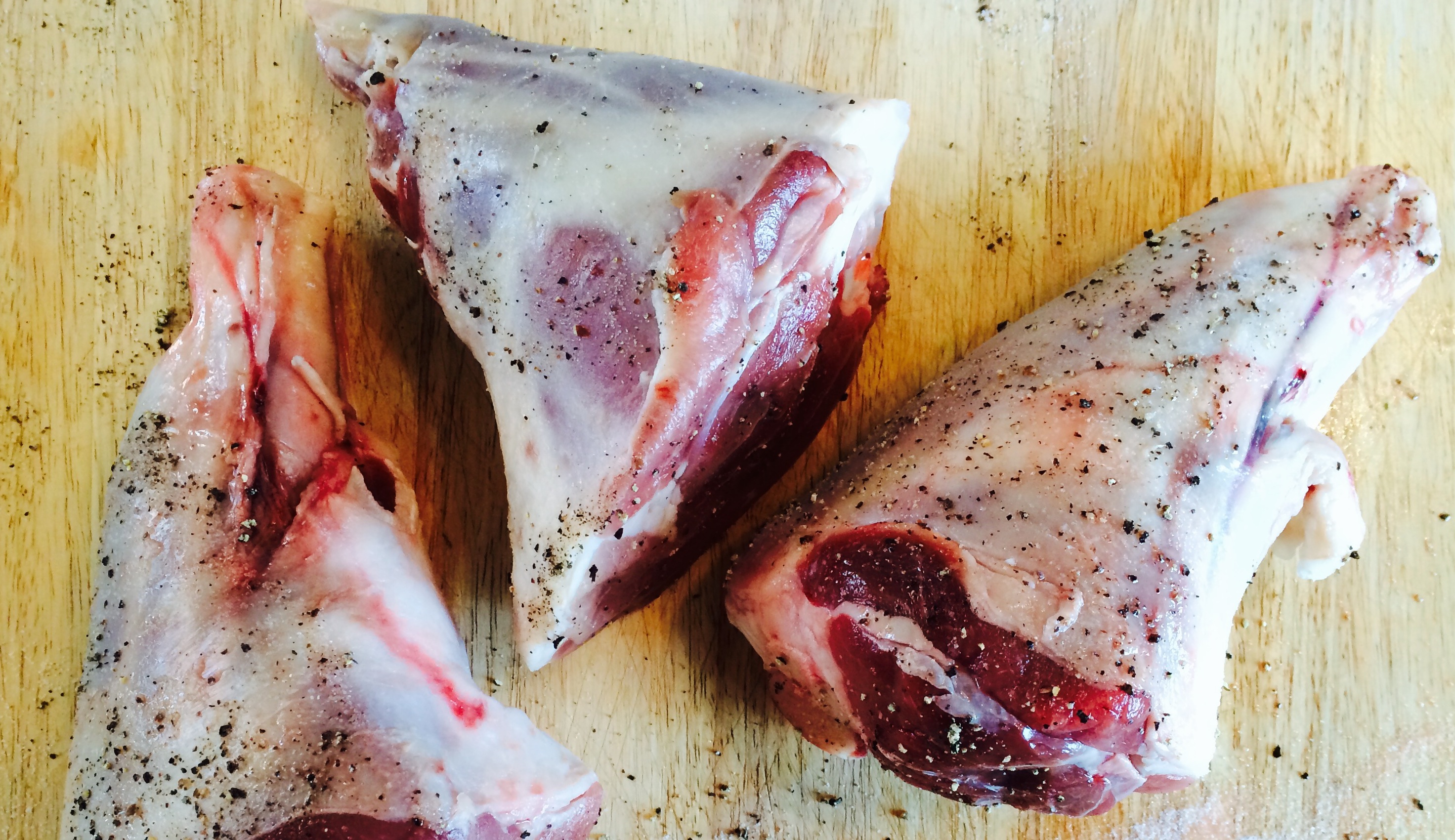
ménage à shank

Puttanesca, a salty tomato sauce that originates from Naples, Italy, is to be slopped all over spaghetti – Spaghetti alla Puttanesca – and consists mainly of anchovies, capers, garlic and olives immersed in chopped tomatoes. The olives will be dropped here though. The word ‘puttanesca’ derives from ‘puttana’ – the Italian for whore – and so ‘alla puttanesca’ is roughly translated to ‘in the style of a whore’. There are several tales that you can find on the Internet but the exact origin of the saucy title remains unclear, it’s true however that most stories are based on just how ‘quick and easy’ the sauce is to make. Oh, how this tickles me!

Photo 21-07-2014 17 18 44

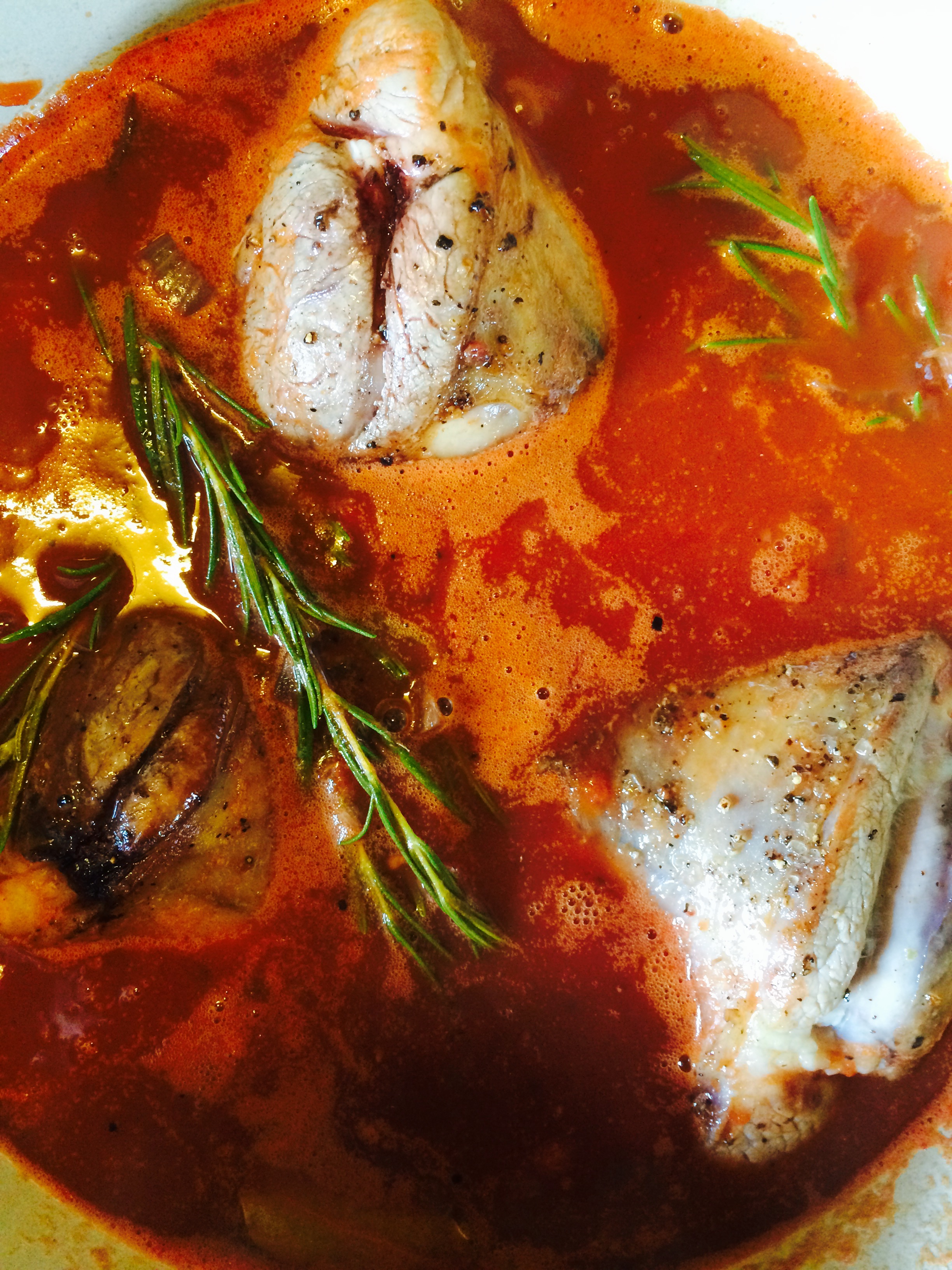
Abraising!

Ingredients:

2 or 3 lamb shanks
1 slug of oil
salt and pepper
4 garlic cloves, finely chopped
150ml good red wine
150ml stock of your choice
6 anchovy fillets, coarsely chopped
2 bay leaves
3 rosemary sprigs
800g chopped tomatoes
2 Tbsp tomato purée
1 Tbsp capers
1 Tbsp basil, chopped
some creamy mash potato

Preparation & Cooking:

Preheat the oven to 170°C. Roll the shanks in salt and pepper then place them into a sufficiently large casserole with a splash of oil. Put the lid on and place over medium-high heat until nicely browned all over, 7-10 minutes.

Remove the shanks and put to one side. Fry the garlic in the casserole for 2 minutes. Add the stock and wine, and let simmer for a couple of minutes.

Add the bay leaves, rosemary sprigs, chopped tomatoes, tomato purée and 3 of the anchovy fillets. Return to a boil and put the shanks back into the casserole with the sauce. Put the lid on and return to the oven to simmer until cooked. The shanks are perfectly cooked when the meat is almost falling from the bone, roughly 3 hours. Hopefully, the shank meat is completely submerged in the sauce – it doesn’t matter if a bit of bone breaches the surface – if not, add some more chopped tomatoes and stock, and return to a boil. Alternatively, roll the shanks over every 40 minutes, spooning some sauce onto the tip of the lambberg each time.

Photo 21-07-2014 20 23 48

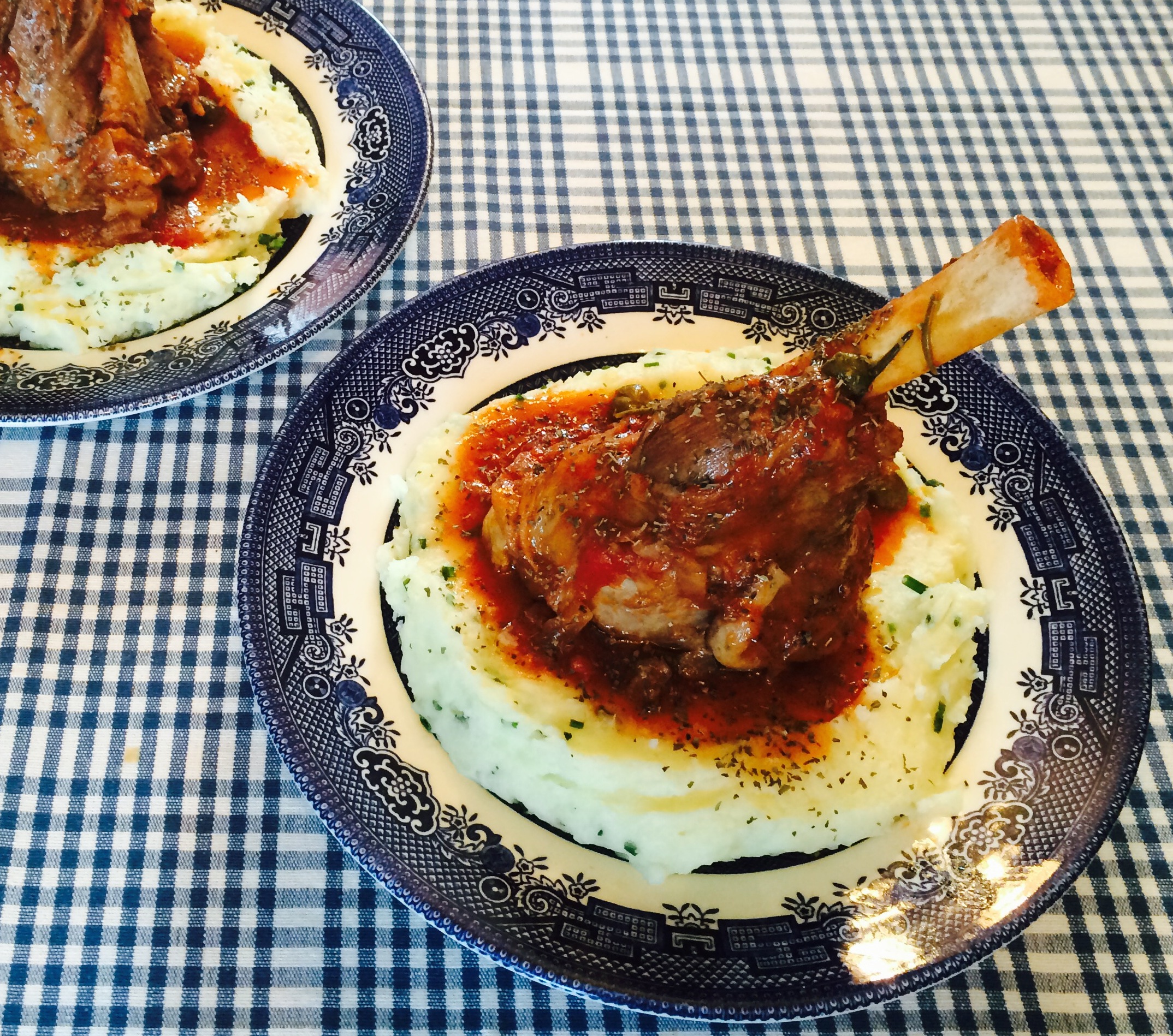
Triumph

Once cooked, remove the shanks from the sauce and set aside to rest. Put the casserole on medium-high heat and add the basil, capers and the rest of the anchovies to the sauce. Simmer and stir for 3-4 minutes.

Carefully place each shank on a bed of creamy mash potato, pour on some sauce and tuck in!

The Ovine Oculus

Today started well, I had not yet finished with breakfast by the time that noon came around. You may suspect that I’m a lazy git that doesn’t roll out of bed until the leisurely hours of the morn, and on some days you might even be right. That, however, is not the case today; I’m an avid believer that a long breakfast is the best breakfast, and this morning I’d chosen to observe this opinion with great candour. Having barrelled out of bed, 9 ante meridiem, I collected The Times, swiped two pastries and a hearty dollop of homemade raspberry jam from the pantry, and filled a cafetière for four, for myself, before stepping out onto the lawn. Oof, what a morning! Sunlight streamed through the yew tree canopy onto the small wrought iron table that sits in the cosy back corner of the garden. Idyllic. On the other side of the hedge a red heifer tried to make some small talk but The Times Magazine had stolen my attention with a feature titled “What the French cook in summer”. Inside, Pierre Koffmann, chef-patron of The Berkeley, London, provides recipes for half a dozen effortlessly delicious summer dishes that he enjoys at home with his family. These include a mouth-watering Leg of Lamb Provençale and a taste bud tickling salmon confit.

Unfortunately, today I won’t be cooking any of Pierre Koffmann’s treats – or anything at all as I will be eating out this evening – but I have been sufficiently baited to schedule a baked sea bass in salt, the article’s magnum opus, for later next week. So what am I to write about now? Well that’s easy, last week’s lamb crown of course. The lamb crown is arguably the best form our ovine friend can take. Not only does it resemble a colossal crown, making it a meal-defining centrepiece, but it’s also great fun to prepare, stuff and carve. Oh, yeah, it’s scrumptious too.
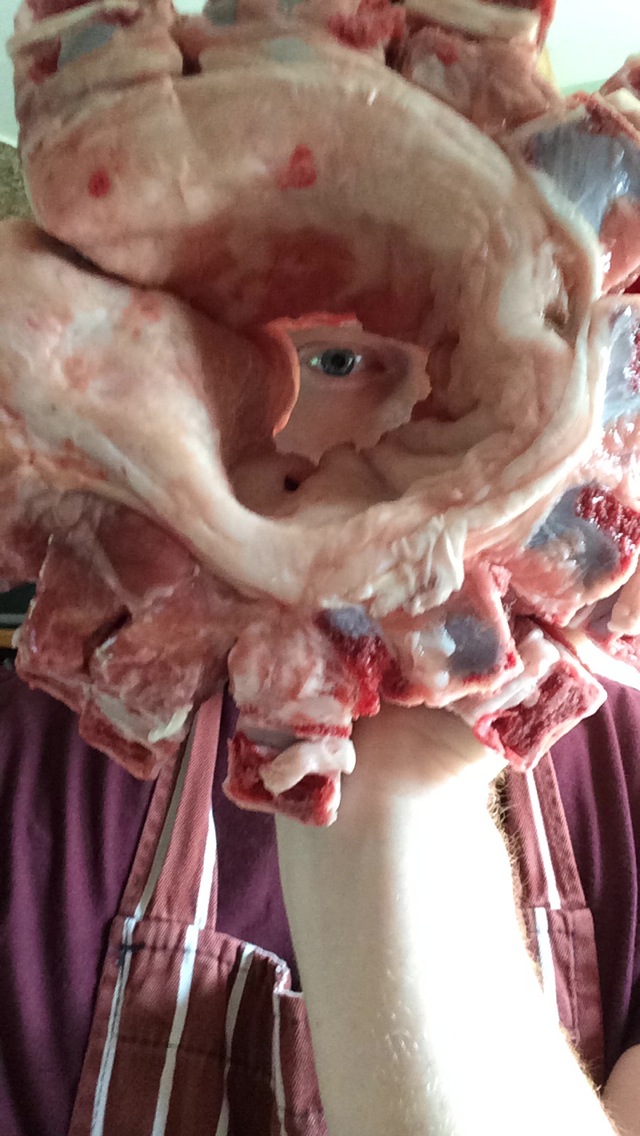
My meaty oculus. I see you!

My meaty oculus. I see you!

For those less familiar with dead animal in the shape of a royal headpiece, allow me to explain what the lamb crown actually is. The crown is a rack of lamb chops (the lamb’s ribs) that have been ‘frenched’ and is connected end-to-end producing the crown structure. A rack usually houses about 8 chops. Your butcher can french the rack for you, or, if you want to rob him of the fun, and I recommend that you do, find a quick online guide and wield your knives with care. I would detail the procedure but I didn’t realise that I would be posting about this when I did it, so sadly I have no photos. The jist of the method is that you want to remove roughly three inches of fat and flesh from the end of the rib opposite to the chop eye, across the entire rack. It’s most easily done using a boning knife but any small sharp knife should make short work of it. This should leave you with curved branches of exposed bone and a well-deserved sense of accomplishment. Tasty. Once frenched, connect the rack end-to-end and tie a single piece of twine around the circumference to hold it all together. If you want to supersize your meal, and feed many mouths (or a few big ones), you can connect multiple racks together.

Now, let’s lather up that crown. Paint the exterior with oil and then sprinkle some chopped herbs all over. I decided to plump for the archetypal lamb herbs: mint and rosemary. Season the entire piece with salt and pepper, and be generous about it.
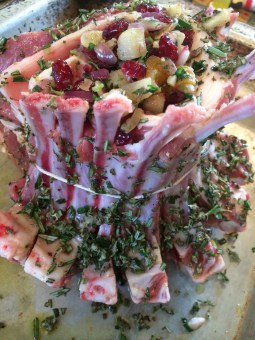
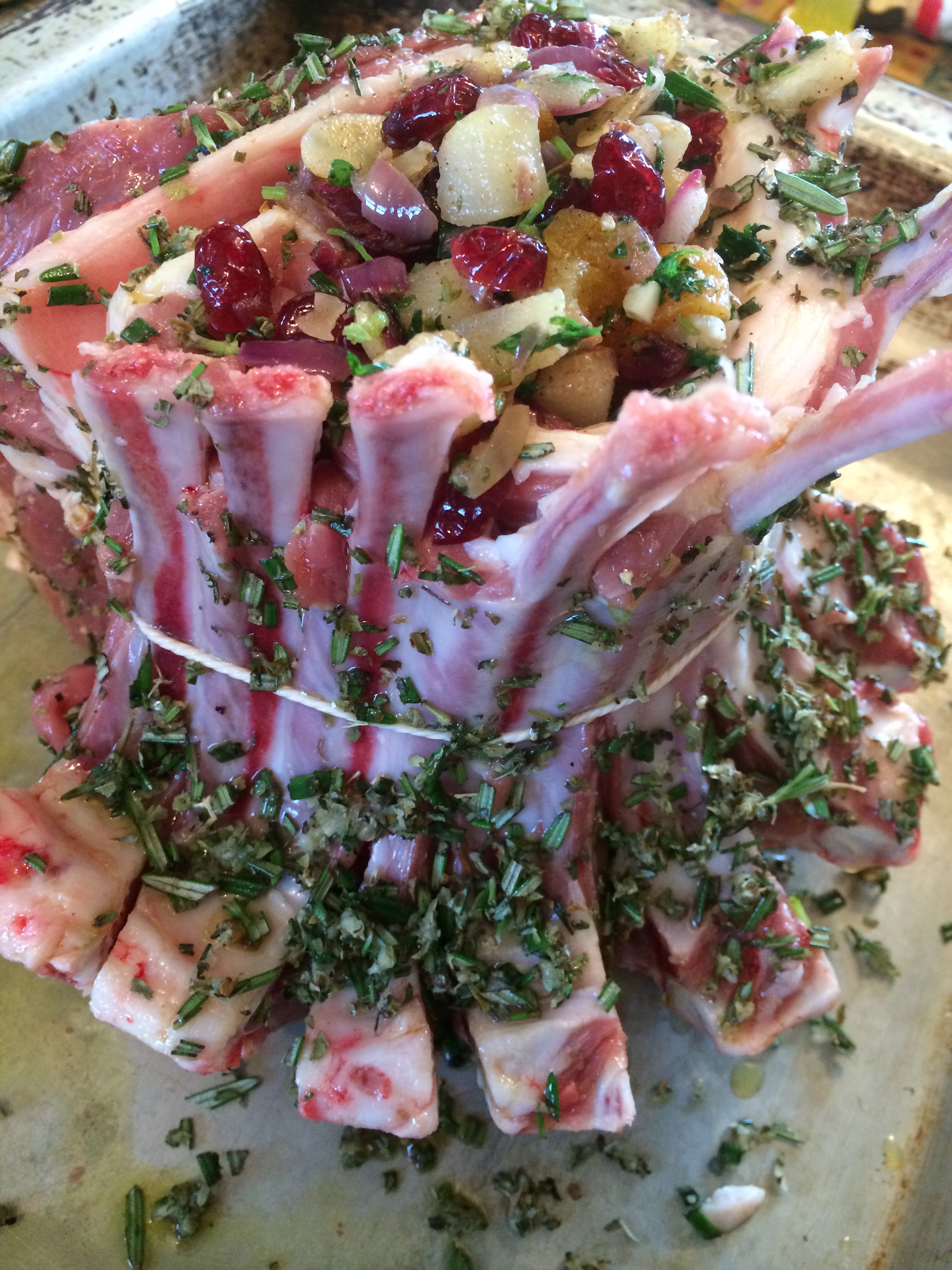
Stuffed and ready to cook.

Thrill seeking? Look no further.

The oculus in the middle is begging to be rammed full of tasty treats, so oblige or be ashamed of yourself. I made my stuffing festive. I’m not sorry.

Ingredients:
1 small onion, chopped
2 cloves of garlic, crushed
1 tsp cumin
1 tsp cinnamon
1 large handful of almonds
100g dried apricots, quartered
50g dried cranberries
2 apples, chopped
1 large handful of fresh parsley, chopped

Preparation & Cooking:
1. Fry onion in some oil over low–med heat until they begin to soften, 5 minutes.
2. Add almonds and toast until they begin to brown slightly, 1 minute.
3. Add cumin, cinnamon, garlic and fruits, continue for 2 minutes.
4. Add parsley and season with salt and pepper, continue for a minute.

Pop the crown into a sufficiently sized roasting tray and decant the stuffing from the frying pan into that inviting orifice. Cheeky! Looking good? I hope so.

Stick a foil hat onto the top of each protruding chop bone and cover the top of the stuffing so that there is no burning. Whack it in the oven. Initially, I found it quite difficult to gauge how long the crown was going to need; various recipes will give you different timings. My naked crown weighed in at 3.5 pounds to which I added a rather dense stuffing. After 1 hour and 10 minutes (20 minutes per pound) in the top oven of our Aga, I dished up and fortuitously it was a perfect pink. The top oven of an Aga is about 240°C. An extra 10 – 15 minutes on top of this will take you to a medium done crown. If you want to cook it more than that, you really are wasting your rack of lamb, go away.
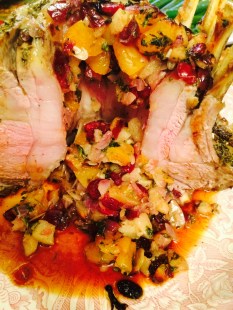
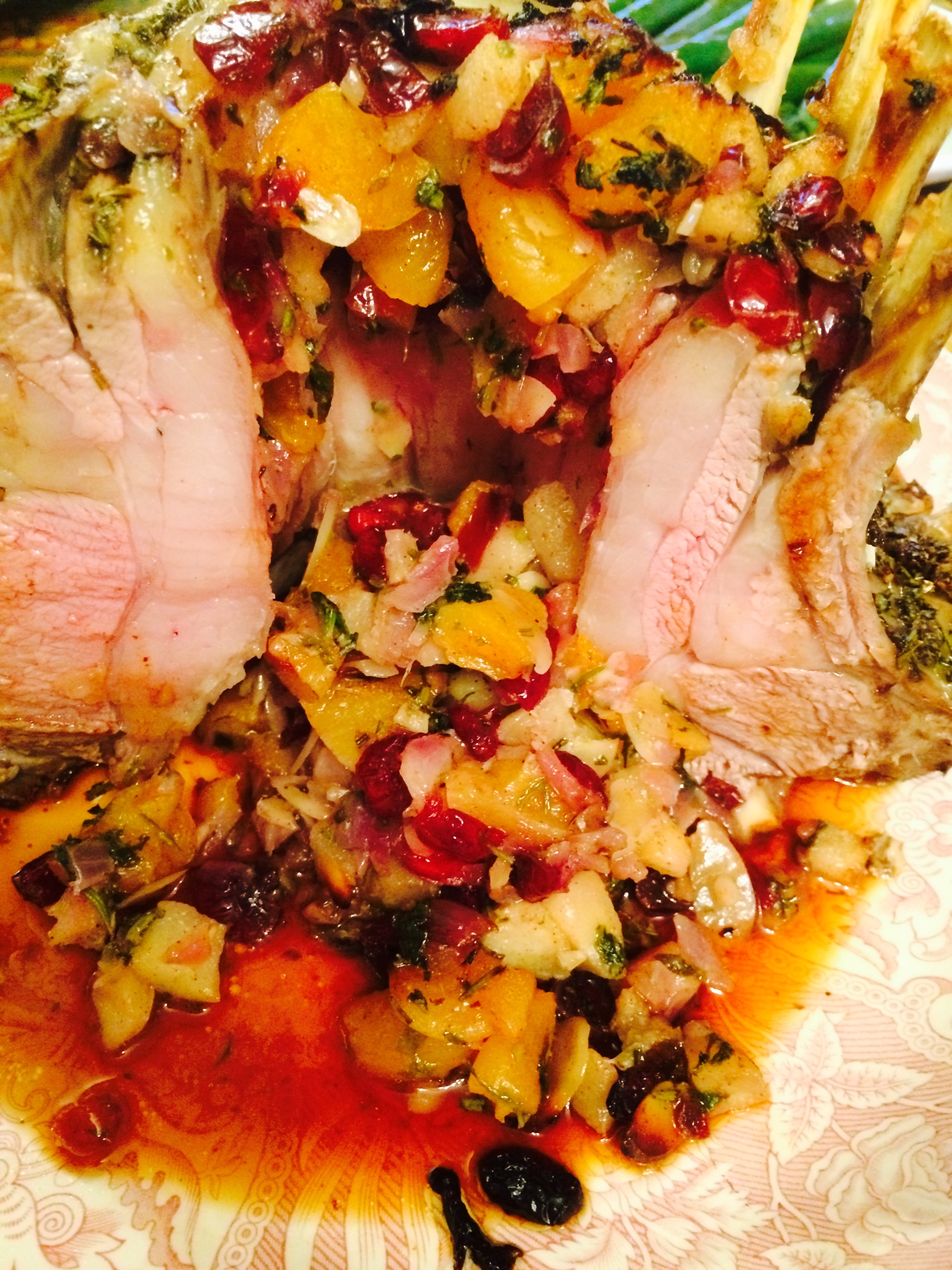
The finished article. Perfectly pink.

The finished article. Perfectly pink.

Once your crown has finished cooking, remove the foil, lift it from the tray – sliding a fish slice beneath so you don’t lose any stuffing – and dish up with the sides (don’t forget a red wine sauce) you’ve been busy preparing in the meantime. You now get to carve, one of the best bits. No fork required. Excusing your fingers, grab the tip of one of the chop bones and allow the carving knife to effortlessly fall through the yummy fat and flesh that connects that chop to the next, watching them peel away from either side of the knife was enough to make me weak in the knees. Work your way around the entire crown, serving each combatant as many chops as they think they can consume. A fatty crown will deprive you of some chop meat but you’ll find yourself rewarded handsomely with flavour.

For all the wonder and awe the crown inspired, it was the stuffing that was the real success story. While the toasted almonds added an extra crunch, the cranberries and apricots lit up the crown like little jewels and brought a sweet edge to the table. Two thumbs up from the parental unit.

I hope you find the time to have a go at this, the frenching of the rack too, as it’s oodles of fun and really not too much trouble if you have a free evening. Enjoy.