Make no mistake this is naughty. For me, there’s something dizzyingly brilliant about all things pig, pork and porcine, and I hope you’re of the same scholarly opinion. I’m also guilty of an exceptionally sweet tooth. It therefore comes as no huge surprise that when I happened across Nigella Lawson’s ‘Ham in cola’ recipe it had to be the next evening meal that I cooked.

Hank’s hammy hock.
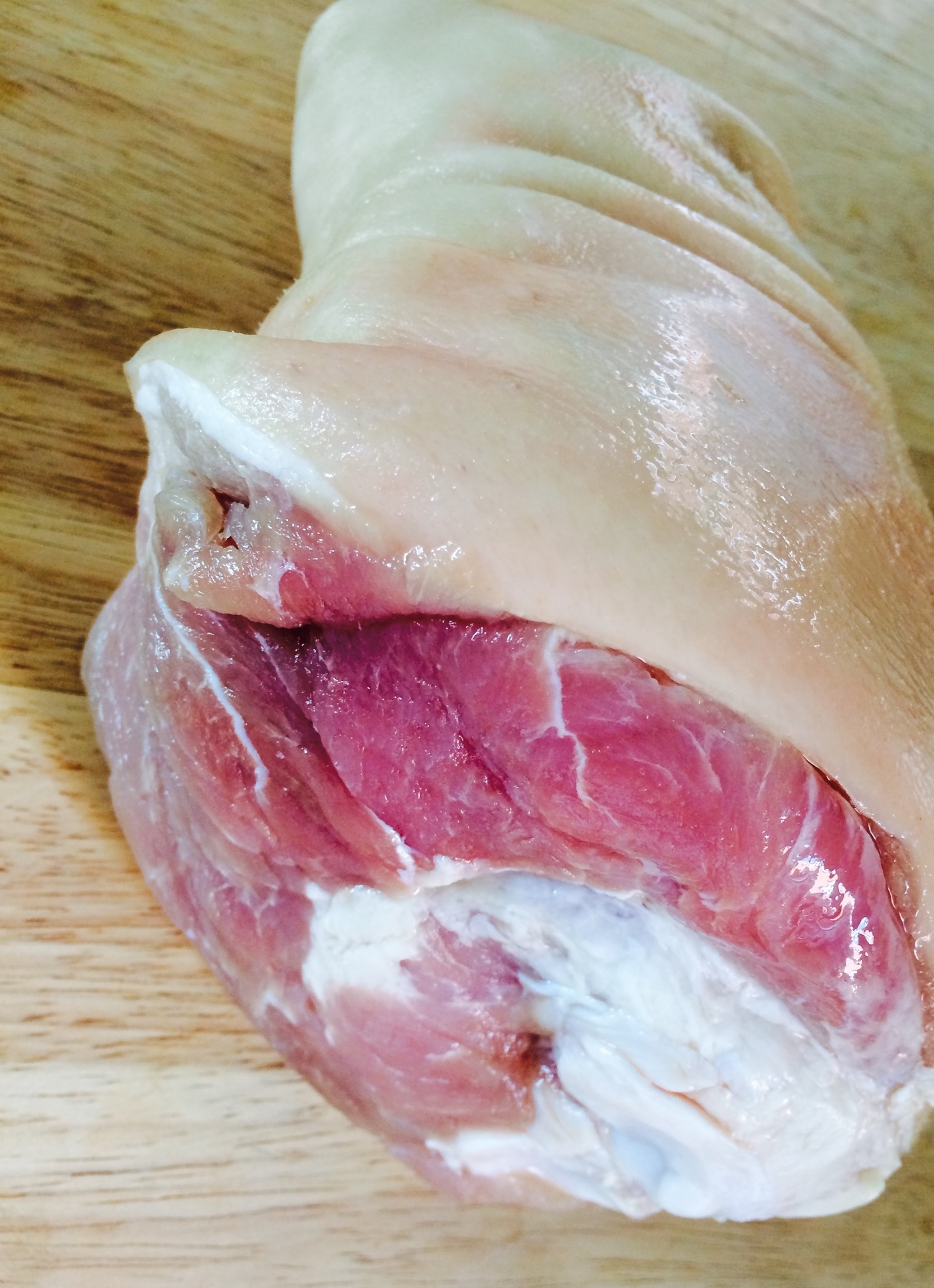
All of this isn’t to say that I charged in with no apprehension at all, a delicious ham hock is to be boiled in cola after all; sweet tooth or not, it’s a very odd concept. Nevertheless, let’s have a crack at this straight forward recipe. Remaining loyal to Lawson, I used the sticky black treacle glaze to coat the hock which is great for bonfire night nostalgia, or bonfire night. A hock is the upper half of a pig’s leg and can be had on or off the bone. Off the bone will be easier to carve but where’s the fun in that? On the bone has the advantage of looking fantastic. Hank, my friendly porcine quadruped, has kindly donated one of his forelegs (characterised by a diameter shorter than that of the hind leg), still on the bone. The dish gets bonus points for being extremely cheap, a succulent ham hock won’t set you back more than a couple of Her Majesty’s sterling.
Remember, prior to cooking you will need to soak your ham in cold water to get it to the desired saltiness. Personally, because I’m debauched and inelegant, I want it as salty as possible so I only soaked for an hour, just enough to take the edge off. Some would seek to soak overnight but it’s a matter of personal taste. If you can’t tell how salty your ham is: cut off slither, chuck in pan, sizzle, consume, analyse.
Start by dropping your ham into a large pan, with a halved onion and a handful of peppercorns, and douse with cola so that it’s entirely covered (about 2 litres). Not diet, don’t be a prat. Bring to a boil and then to reduce to a simmer. If you’re not going to use cola, you will want to add some leeks, carrots, thyme and a bay leaf too, you could even add some peas to make soup with later. Exact timing doesn’t really matter but allow the ham to simmer until the meat starts to come away from the bone – about an hour per kilo.
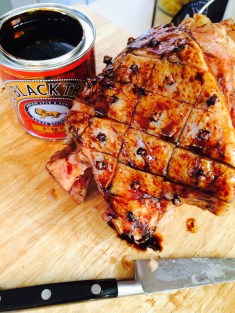
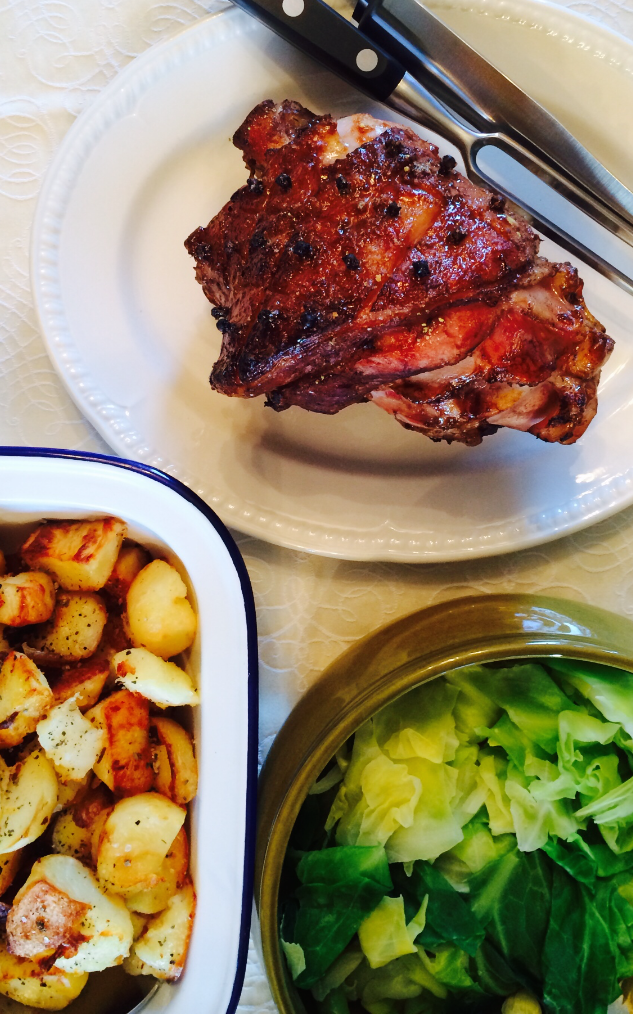
Told you it looks best on the bone!
Once boiled, place the hock on the side so that it cools to a temperature suitable for handling. In the meantime, get your sides going and preheat the oven to 240°C. Return to the cooled hock and, minding your digits, use a sharp knife to help you peel away the skin while leaving a nice juicy layer of fat between you and the flesh. Being careful to not cut the flesh, score the fat into diamonds. Give the entirety of the exposed fat a generous black treacle coating and then sprinkle on Demerara sugar and mustard powder to complete your glaze. Now stud each diamond with a clove.
Finally, plonk it onto a foil covered tray and slide it into to the oven to roast for 10-15 minutes while keeping an eye on it, nobody likes burnt glaze. Your masterpiece is now complete. I served with cabbage, roasties, apple sauce and most importantly, a chilled, dry Riesling (Dr Loosen Red Slate Riesling 2011), which paired well with the ham, and can be picked up for a tenner. Superb.
Hunker down for some quality time with your hog. Oink.
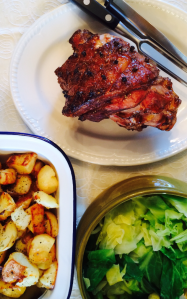
Eat
Post-mortem:
The excitement of preparing the hock was kid-in-a-sweetshopesque, hitting fever pitch when pouring cola all over it and smothering the scored fat with black treacle. That said, contrary to Nigella’s opinion that “No one who cooks it, cooks it just once: it always earns a place in every repertoire.”, I will never boil a ham in cola again, not because it was bad but because I felt it didn’t add a great deal to the dish and I lost out on delicious soup potential. If you really fancy making a cola soup (it is a thing, I checked), go mental, do it, go sane again and realise what you just did was dumb and gross. The black treacle glaze had much merit in its deliciousness, and while it’ll never be the classic honey mustard glaze, it’s spectacular once in a while. I’m certain it will return to the family table for bonfire night!
 The Porky Pantry