The roast beef fore rib is a timeless British classic that any roast dinner fan should be comfortable rolling out with minimal effort. It provides the perfect centrepiece for a special family dinner.
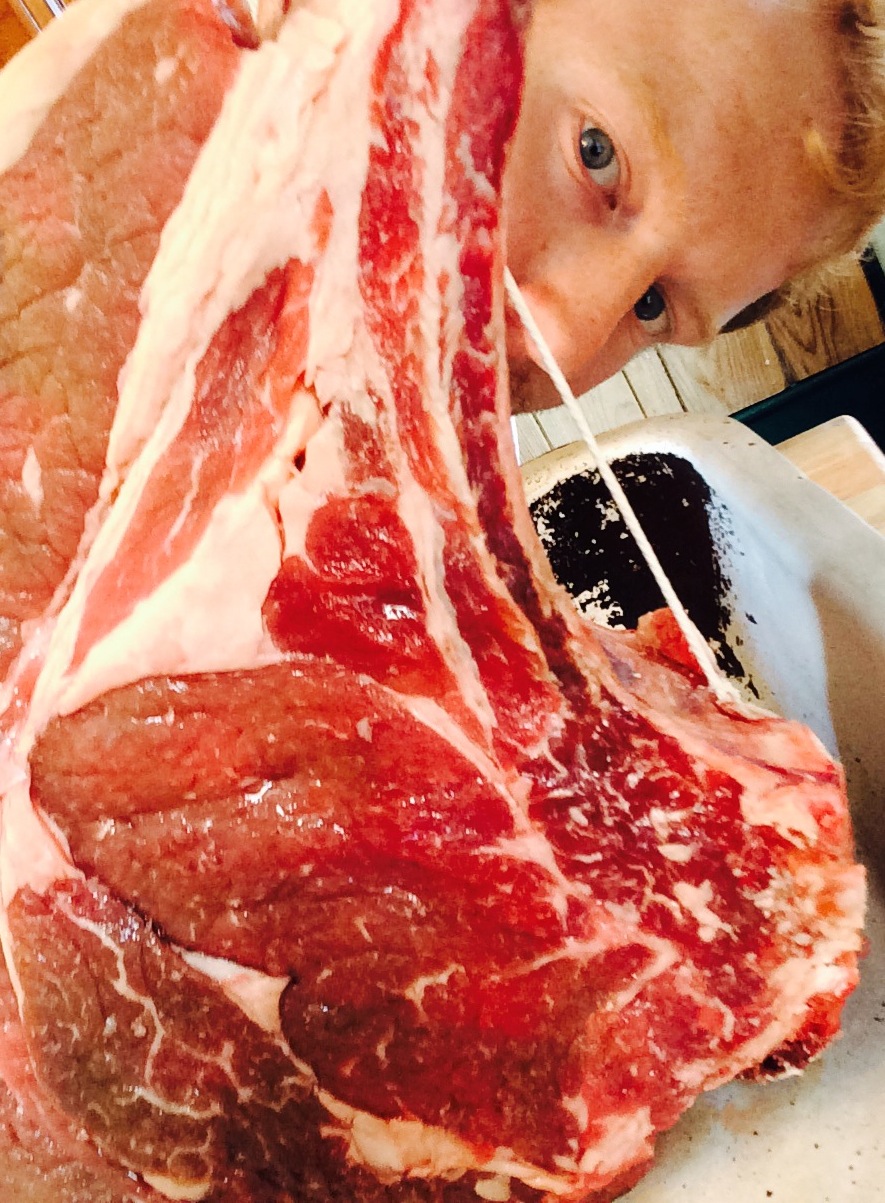
Mooooo
A complete fore rib is made up of five ribs but your butcher will happily provide you with a subset of those. As I’m feeding just three mouths, and the eye of this joint is nothing short of colossal, I will be roasting just three ribs, more than enough to fill us, leaving ample leftovers for cold beef sarnies!
Owing to the hearty shell of fat that envelops the joint, the beef rib is possibly the most flavoursome part of our dear cow. With that noted, it’s best to proceed without fancy marinades or, indeed, anything of the sort. Keep it simple and drive the roast home with some complementary sides and you’re sure to fall in favour with everybody sat at the table. I will be serving up with roast beetroots and potatoes, not forgetting a hot mountain of horseradish!
When negotiating with your butcher, there are a few technicalities – and an amusing piece of terminology – worth keeping track of, ask if the ‘paddywhack’ has been removed, and if the chine (backbone) and skin has been tied back on. The paddywhack is a yellow-white tendon that lies along the neck and back of the beast to protect the neck from the weight of the cow’s own head. It’s not delicious – you don’t want it. Tying the chine and skin back onto the rib – after the paddywhack has been disposed of – protects the meat until it is time to carve. Let’s crack on.
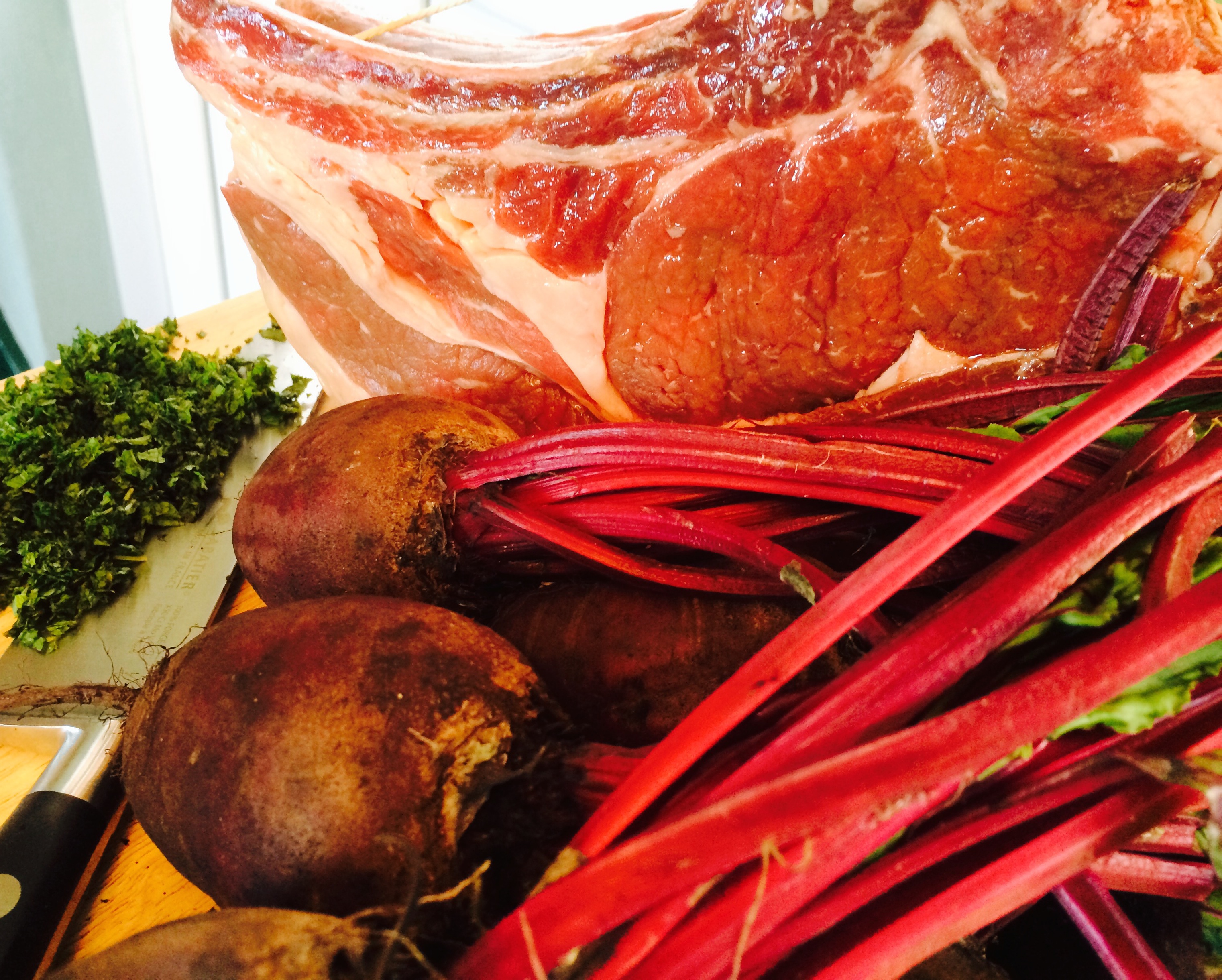
Beef & Beet
Ingredients:
1 (or part of a) beef fore rib
oil
5 cloves, crushed
salt and pepper
1 Tbsp English mustard powder
3 Tbsp rosemary leaves, coarsely chopped
6 – 8 tennis ball sized beetroots
horseradish
Preparation & Cooking:
Preheat your oven to 240°C or use the bottom of your Aga roasting oven.
Combine oil, rosemary, garlic, salt and pepper in a bowl and rub over the entire rib. Sprinkle a tablespoon of mustard powder onto the oiled fat; this will help the fat to crisp up nicely.
Gently wash beetroots under the cold tap being careful to not tear the skin. Cut the leaves to within an inch of the beet (stops the beet leaking its juice) and leave the root on. Place each beetroot in its own foil package and salt each one before closing them up, you can drizzle a little oil on too, if you like, though not necessary.
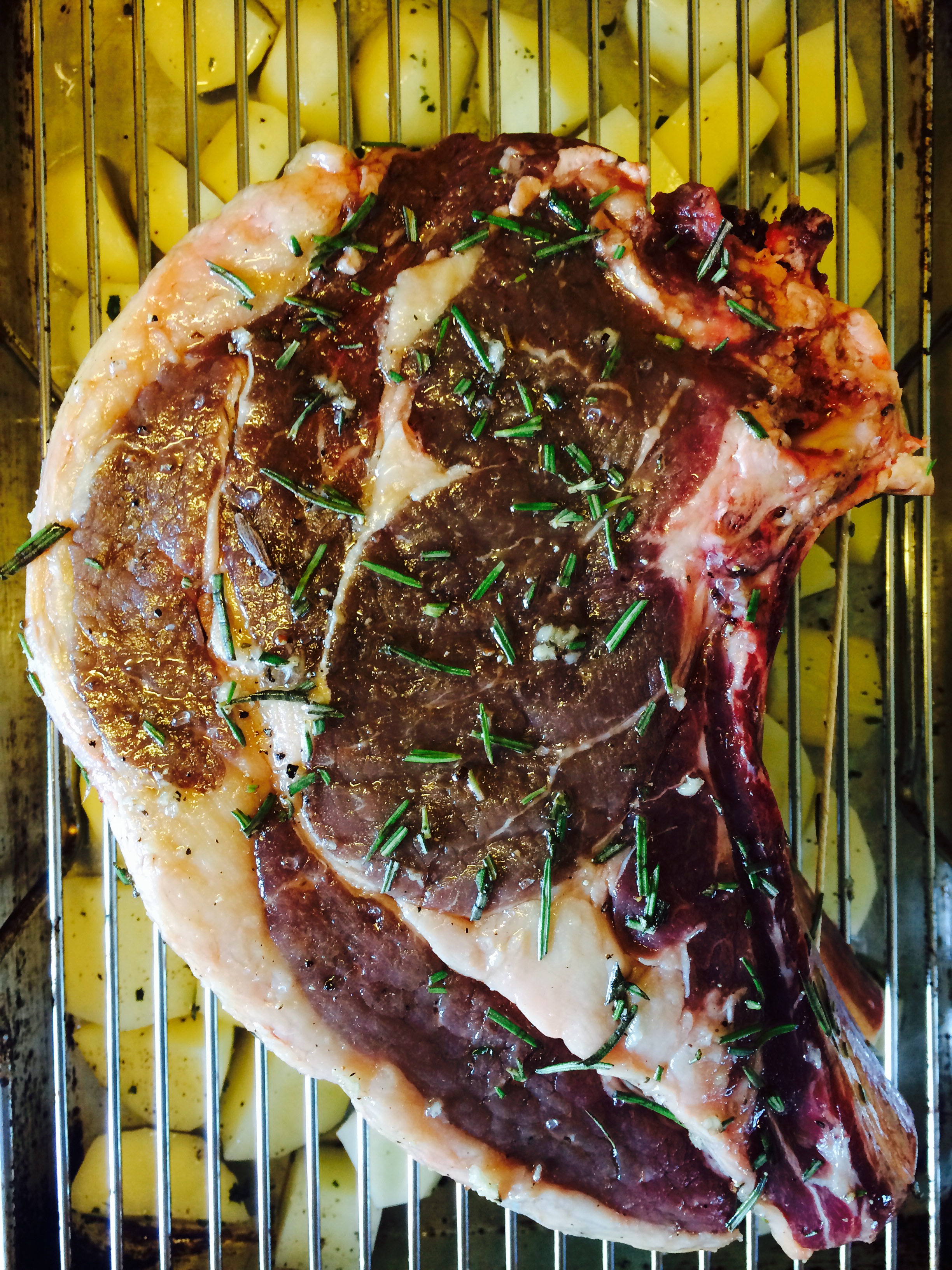
Beautiful Bessie sits atop Mt. Potato
Find a deep roasting tin that can accommodate the rack that will hold the rib aloft. Heat some oil in the roasting tin before adding the foil beetroot parcels and any potatoes you intend to roast. Place the rack in the roasting tray and the rib on top; slide it into the bottom of the oven. This tray-rack arrangement will ensure that the roast potatoes get some lovely bovine juices all over them! Cook at 240°C for 20 minutes then reduce the temperature to 190°C and cook for 15 minutes per lb. If using an Aga, 15 minutes per lb will suffice for the entirety of the roasting period. An extra 15 minutes will cook to medium, and a further 15 will give well-done beef, but this really is best eaten pink and just bleeding in the centre. Rare meat will be at 50-55°C. If you check the temperature with a thermometer, leave it in so that you don’t lose any juices.
While the beef cooks, keep an eye on the beetroots and potatoes. Remove potatoes if they finish before the beef (unlikely if using the bottom of an Aga roasting oven). To test the beetroots, rub their skin, if it slips with your finger, they’re done. Typically, the beetroots require around 50 minutes but they’re size dependent. Once cooked, remove beetroots from the foil and set aside to cool to a handling temperature. Cut off the roots and the top – removing the remainder of the leaves – peel away the skin and slice to serve.
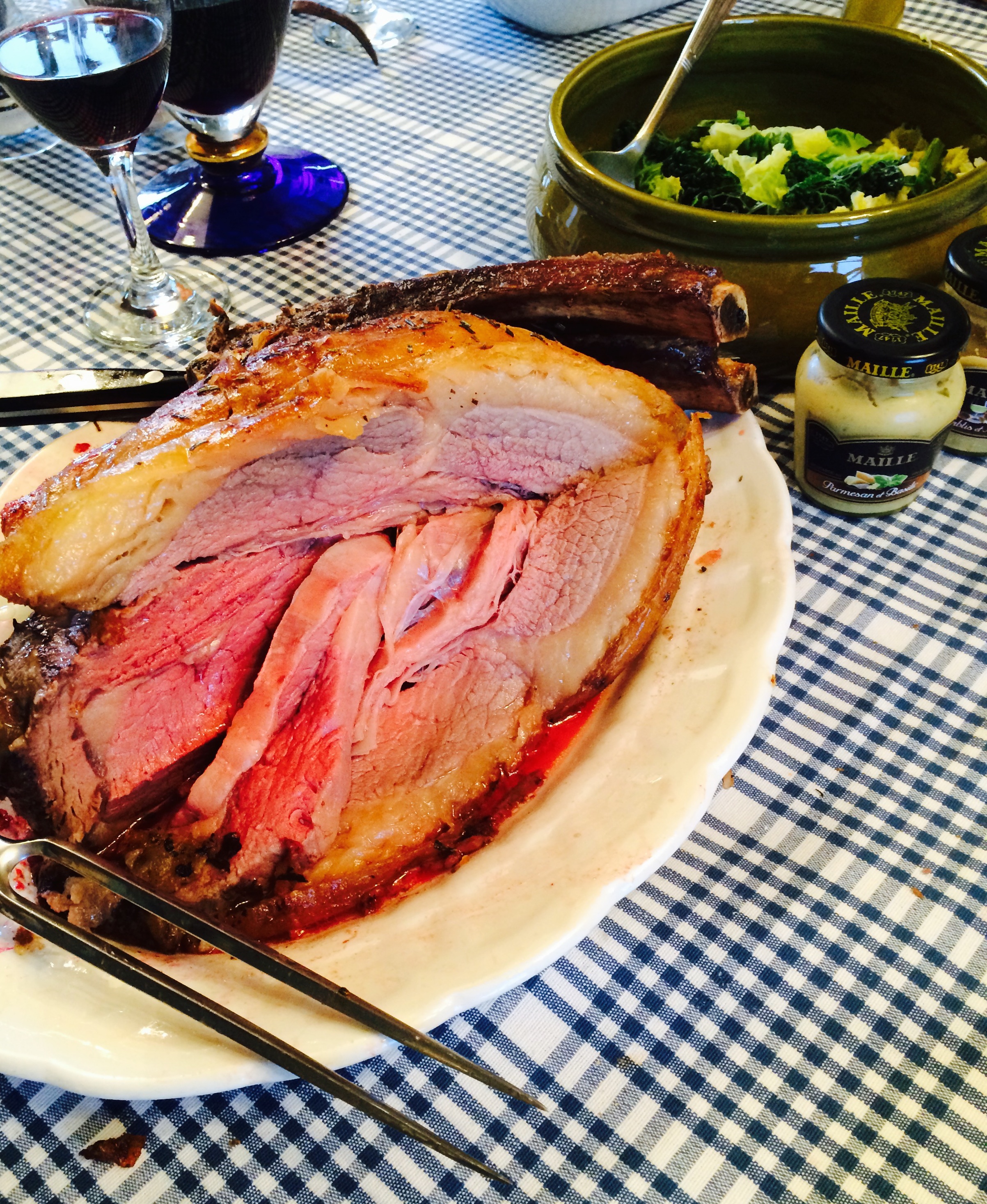
Ooo, just peels away
Once the beef is cooked to your liking, remove it from the oven and set aside to rest so that it can soak up all those yummy juices, at least 15 minutes and up to the amount of time it was cooked for. If you have an Aga, let it rest in the simmering oven. Otherwise, turn the heat down to 100°C and let it rest there.
To carve: remove any string and then, using a carving knife, cut along the rib bone contour and remove the chine and ribs. Now use the entire length of the carving knife blade to cut slices about 3mm from the rib. Oooooo tasty. Tuck in.
 The Porky Pantry